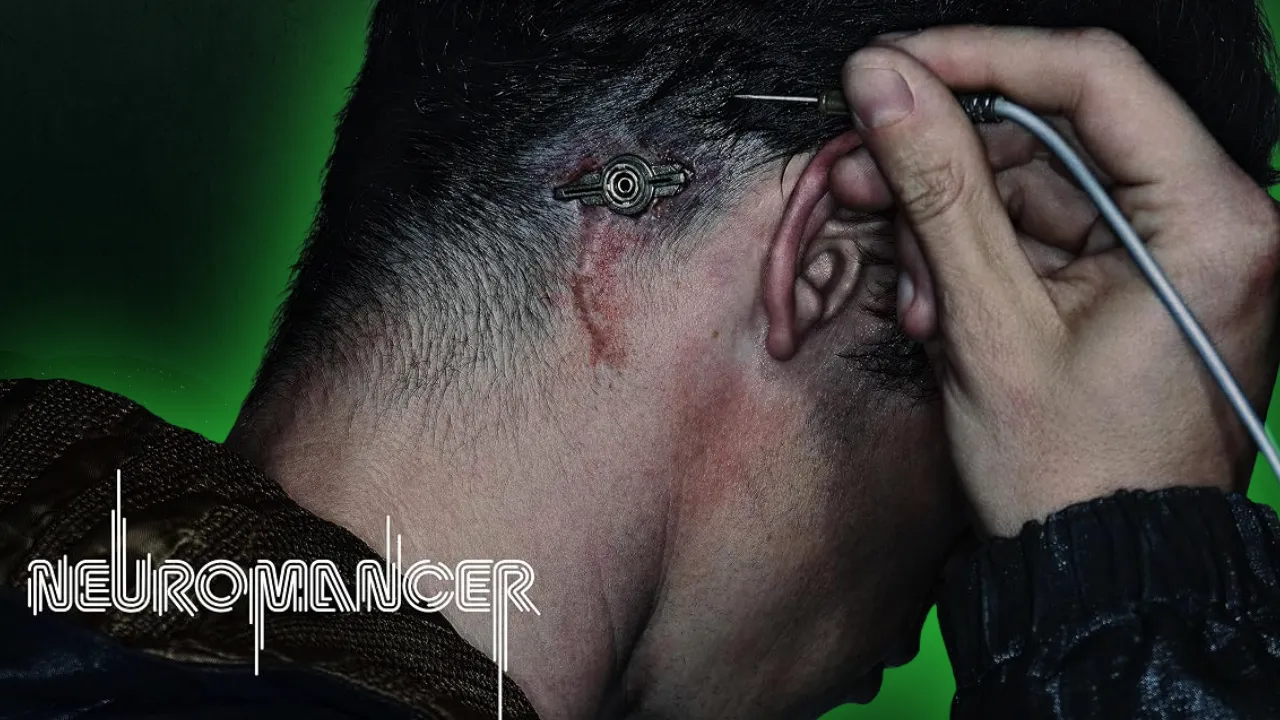

Four decades, half a dozen failed attempts, and one very patient author later, the book that invented “cyberspace” is finally getting its adaptation.
Some novels take decades to find the right medium. Neuromancer has taken longer than most. William Gibson’s 1984 debut didn’t just launch the cyberpunk genre – it named the digital world we now live inside before that world existed, coining the term “cyberspace” years before the internet as we know it was born. For forty years, Hollywood has tried and failed to bring it to screen, with directors like Splice’s Vincenzo Natali and Deadpool’s Tim Miller both attached at various points and neither getting past development. Apple TV is the studio finally getting it made and it’s arriving January 22, 2027, with two episodes to start and one new episode every Friday through March 19.
What Apple TV’s Neuromancer Is Actually About
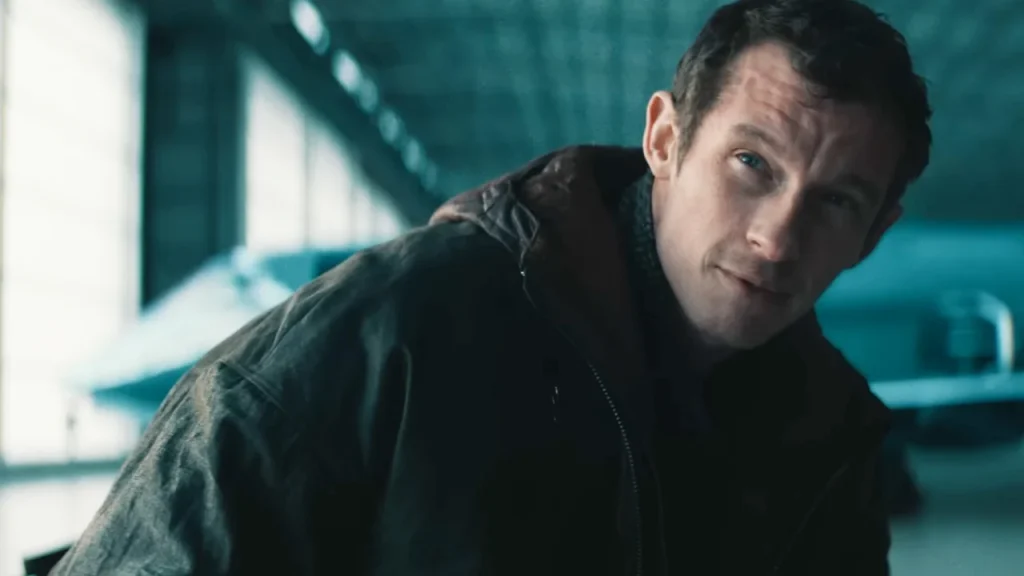
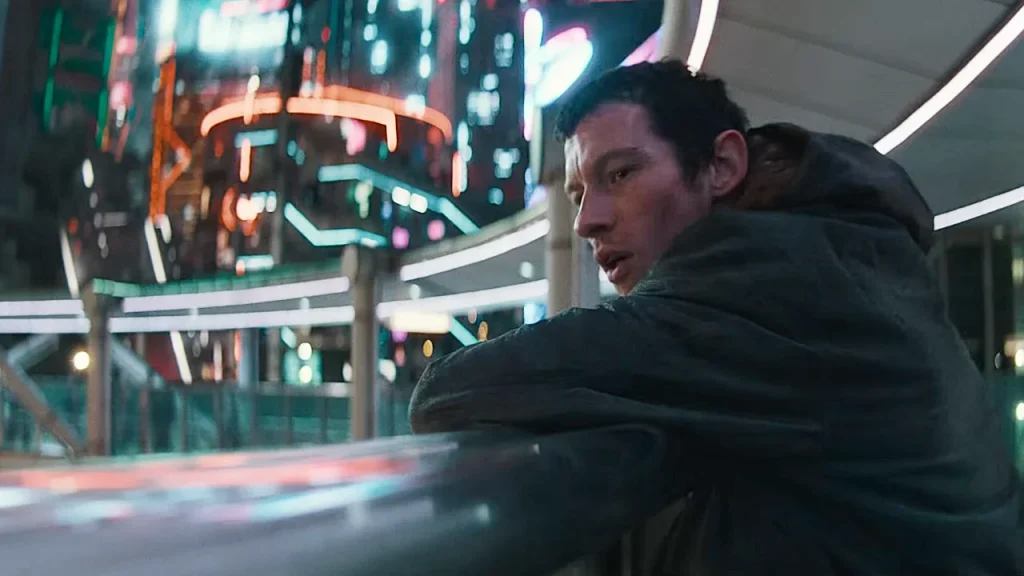
Set in a near-future, neon-soaked Japan, the series follows Case (Callum Turner), a once-legendary hacker – a “console cowboy” in the novel’s own slang – who’s been punished by having his ability to jack directly into cyberspace surgically stripped away. When a mysterious operative named Armitage (Mark Strong) offers him a cure in exchange for one dangerous job, Case is pulled back into a world of corporate espionage alongside Molly Millions (Briana Middleton), a razor-fingered “street samurai” assassin with mirrored eyes and her own reasons for taking the job.
Together, they’re drawn into a heist targeting a powerful corporate dynasty guarding secrets that go far beyond money including, eventually, contact with an artificial intelligence operating well outside anything the world was prepared for.
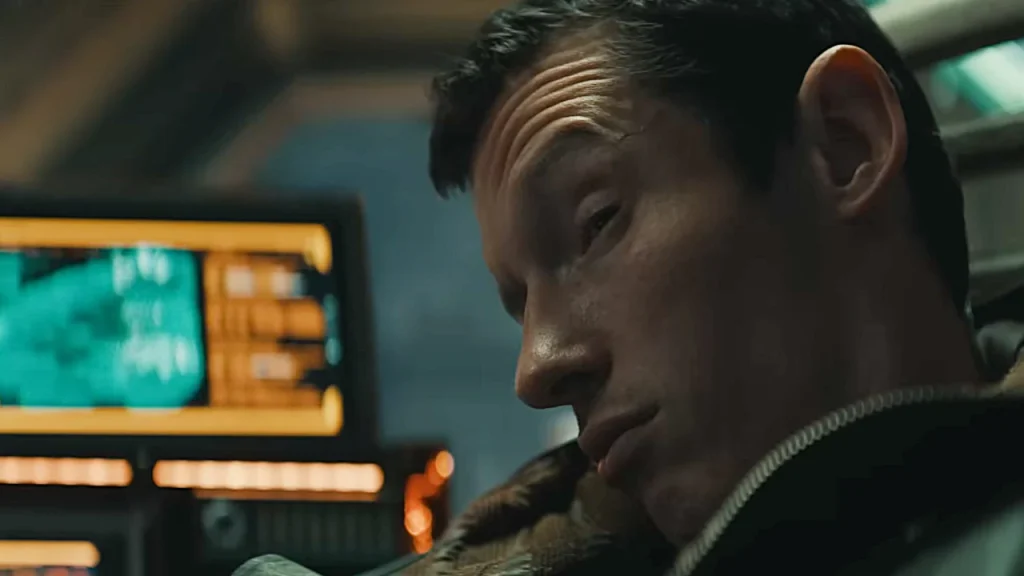
What makes this sci-fi adaptation notable isn’t just the story – it’s who’s overseeing it. Gibson himself is attached as a consulting producer, which early reporting suggests means fans can expect a genuinely faithful take rather than a loose reinterpretation. Showrunner Graham Roland (Dark Winds) is leading the series, with JD Dillard (The Twilight Zone, Devotion) directing the pilot.
The Cast of Neuromancer TV Series – and Why Each Name Matters
Callum Turner leads as Case, arriving with real momentum behind him. He’s been the lead of Apple’s own WWII limited series Masters of the Air, starred opposite George Clooney’s direction in The Boys in the Boat, and played Theseus Scamander across the Fantastic Beasts franchise. He’s also been persistently rumored as a contender for the next James Bond casting that would make a certain kind of sense given how comfortably he wears a morally shaded antihero here.
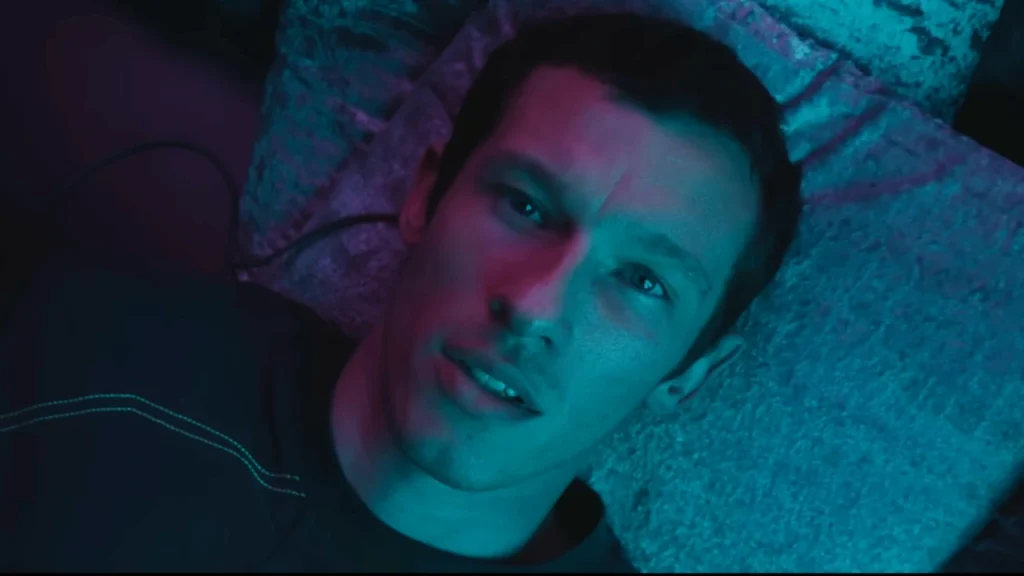
- Briana Middleton plays Molly Millions, one of cyberpunk fiction’s most iconic characters, following acclaimed work in HBO’s The Nevers.
- Mark Strong takes on Armitage, and if there’s a name on this call sheet audiences already trust completely, it’s his. Few character actors working today have built a resume as reliably excellent – the Kingsman franchise, Sherlock Holmes, Zero Dark Thirty, 1917 and casting him as the story’s most enigmatic operator is a smart bet on his ability to make ambiguity compelling.
- Joseph Lee, fresh off Netflix’s Emmy-winning Beef, plays Hideo, Molly’s ninja-trained bodyguard.
- Peter Sarsgaard rounds out the cast in a key role, bringing an actual Volpi Cup for Best Actor (Venice Film Festival, for 2023’s Memory) to a project that clearly wanted awards-caliber gravity in its supporting bench.
- Clémence Poésy – recognizable from the Harry Potter films and In Bruges – also joins, and notably isn’t new to prestige, high-concept sci-fi: she previously appeared in Christopher Nolan’s Tenet, giving Neuromancer a direct thematic cousin already on her resume.
The supporting cast goes deeper still, including Broadway legend André De Shields (a Tony winner for Hadestown), Emma Laird, Max Irons, and Dane DeHaan.
The Budget of Sci-Fi Thriller Neuromancer: How Big Is Apple Betting on This?
Apple hasn’t published an official per-episode figure for Neuromancer, but the context around it tells its own story. This is a studio that reportedly spent around $20 million per episode on Severance Season 2 and has been characterized as paying up to $15 million an episode for its biggest sci-fi swings going back to the platform’s earliest days. Foundation, its Isaac Asimov adaptation, is regularly cited as one of the most expensive shows ever produced.
Given Neuromancer’s need to build an entirely original cyberpunk Japan, one that has to feel distinct from Blade Runner, Ghost in the Shell, and every other genre touchstone it inspired – it would be a surprise if this wasn’t sitting in that same premium tier. Early looks at the series notably favor physical, practical sets over CGI environments, which tends to be even more expensive than it looks on screen.
Why Apple TV Keeps Betting on Shows Like This?
This is where Neuromancer fits into a much bigger pattern. While other streamers chase reboots, spinoffs, and reliably algorithm-friendly comfort content, Apple TV has spent the last several years quietly building a reputation as the one place still willing to gamble on genuinely strange, cerebral science fiction. Severance turned a surreal corporate-dystopia premise about surgically split consciousness into one of the most talked-about shows of the decade. Silo built a slow-burn mystery around a post-apocalyptic underground bunker where even asking the wrong question can get you killed. Foundation took on one of the most famously “unadaptable” novels in science fiction and turned it into a galaxy-spanning epic anyway.
Neuromancer slots directly into that lineage, a genre-founding text that’s intimidated adapters for forty years, handed to a studio that has built its entire sci-fi identity on not blinking at difficult material. If Apple’s recent track record holds, this won’t be a simplified, mass-market cyberpunk story. It’ll be the weird, uncompromising version which is exactly what a book this influential deserves.
From Gibson’s Cyberspace to Real Brain-Computer Interfaces
Here’s what makes Neuromancer land differently watching it in 2027 than it would have in 1984: the central idea driving Case’s entire story – a human mind plugging directly into a digital network, bypassing screens and keyboards entirely – isn’t just theoretical anymore. It’s a live area of research.
To be clear, Neuromancer isn’t about Neuralink, and this isn’t a claim that Elon Musk’s brain-computer interface company is building anything resembling Gibson’s cyberspace. But the conceptual overlap is hard to ignore. Neuralink’s stated long-term ambition is a “generalised neural interface” connecting the human brain directly to computers, and the company says it’s moving toward high-volume production of its implants in 2026, with a dozen patients already using the devices to control computers, browse the internet, and play games using thought alone.
Gibson wrote about jacking a human nervous system straight into a digital world decades before anyone had built the hardware to attempt it for real. Neuromancer the show doesn’t need to reference Neuralink at all to feel newly relevant – the real world quietly caught up to the fiction on its own.
Related Post – Critics Can’t Agree If Dark Matter S2 Is Good or Awful
Facts Worth Knowing Before You Watch Neuromancer
- Neuromancer is the only novel ever to win science fiction’s unofficial “triple crown” the Hugo, Nebula, and Philip K. Dick Awards – a feat no other book has matched before or since.
- Gibson coined the term “cyberspace” in the story that preceded the novel, years before it entered everyday language.
- The book’s fingerprints are all over The Matrix, widely cited as one of its most direct descendants.
- Neuromancer TV series isn’t the first attempt to adapt it – directors including Torque’s Joseph Kahn and Splice’s Vincenzo Natali were attached to earlier versions that never made it to production. This is the first time a Neuromancer adaptation has actually been greenlit and filmed.
- The series is produced by Paramount Television Studios and Anonymous Content, the team behind Apple’s Disclaimer and Defending Jacob.
- Gibson followed the novel with two sequels, Count Zero and Mona Lisa Overdrive, forming what he called the “Sprawl trilogy” – leaving the door open for future seasons if this one lands.
Neuromancer premieres on Apple TV on January 22, 2027.