
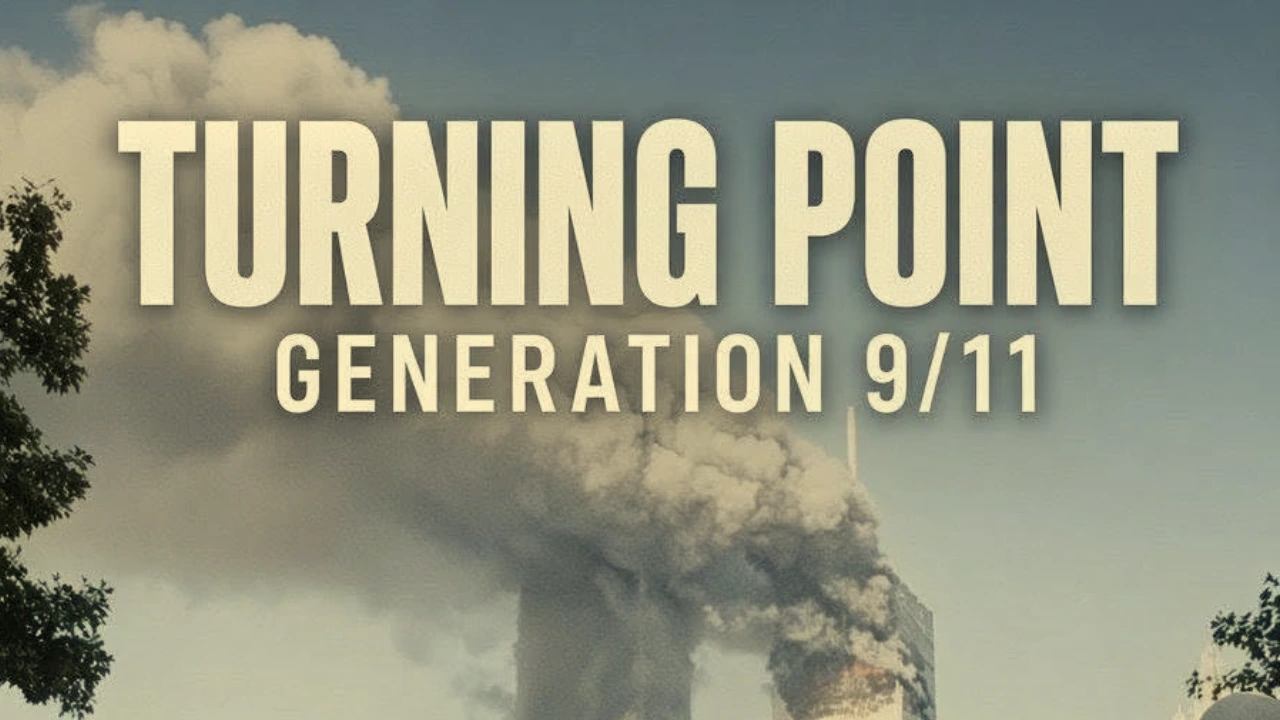

On September 2, 2026, Netflix will release Turning Point: Generation 9/11, a documentary arriving just over a week before the twenty-fifth anniversary of the day it examines. It is not an easy watch, and it isn’t meant to be. The film is built around a quiet, unsettling fact: more than half of the people alive today were either not yet born on September 11, 2001, or were too young to hold any memory of it. And yet almost every one of them has spent their entire life inside the world that morning created.
What the Film ‘Turning Point: Generation 9/11’ Sets Out to Do
Directed by Brian Knappenberger, the Netflix documentary Turning Point: Generation 9/11 is the fourth installment in Netflix’s Turning Point franchise, following earlier entries on the Cold War, the Vietnam War, and the original attacks themselves. Where those films largely looked backward at the events they covered, Generation 9/11 looks forward tracing the quarter-century of consequence that followed a single morning, and asking what it did to the people who never chose to carry it.
The film doesn’t linger on the attacks as spectacle. Instead, it turns its attention to those left standing in their aftermath: children who lost a parent that day and grew up defined by an absence they can barely remember causing; journalists who came of age covering the wars that followed, learning their profession inside a conflict with no clear ending; and young Marines and Afghan citizens who lived through the chaotic 2021 withdrawal from Kabul, a moment that closed one chapter of the story only by opening a more painful one.
The Story Netflix’s Turning Point: Generation Chooses to Tell
What separates Turning Point: Generation 9/11 from a straightforward historical retrospective is its refusal to treat 9/11 as something that simply happened and ended. The film argues, gently but insistently, that the day never really closed – it just kept redistributing its weight onto people too young to have asked for it. Airport security lines, surveillance debates, two decades of war, a generation’s relationship to fear itself: the documentary traces all of it back to the same origin point, then follows the thread outward into ordinary lives.
It’s a difficult balance to strike – history sturdy enough to inform, personal enough to devastate and the film leans on firsthand testimony rather than narration to do it. There’s something almost unbearably intimate about watching someone describe growing up with a photograph instead of a parent, or a soldier trying to explain what it felt like to help end a war that started before he could read.
Turning Point: Generation 9/11 Quotes and Lines That Hit Hardest
Turning Point: Generation 9/11 earns its power in exactly the way documentaries rarely manage anymore: through people, not narration. Stripped of spectacle, its unflinching interviews sit with children who grew up defined by a parent’s absence, journalists who came of age inside endless war, and Afghan citizens and Marines still carrying the weight of a withdrawal that closed nothing.
What they say isn’t polished for effect – it’s plain, unguarded, and devastating precisely because it’s true. The lines below aren’t quotes chosen for shock value; they’re the moments where twenty-five years of consequence suddenly has a human voice attached to it.
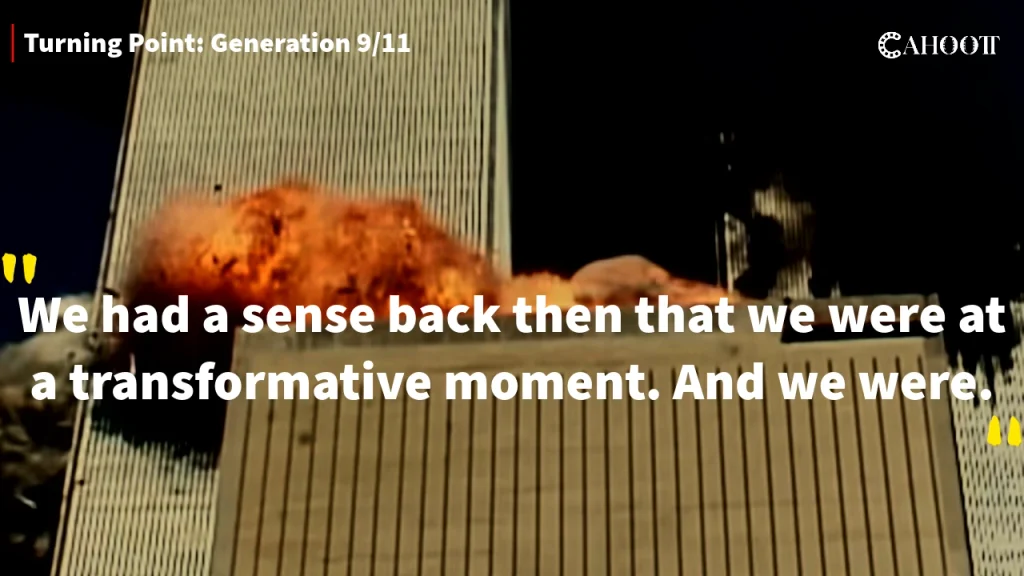
1. We had a sense back then that we were at a transformative moment. And we were.
2. Immediately, your next breath was like sucking in a cup full of sand, and you just say to yourself, “This is how it ends.”
3. Like, the skies had rained fire and who knows what could come next.
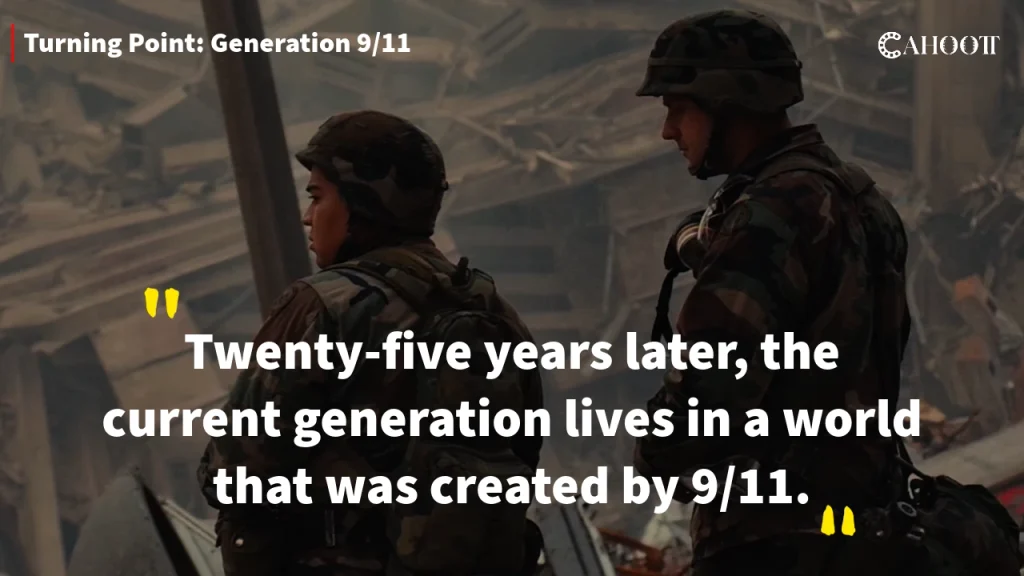
4. Twenty-five years later, the current generation lives in a world that was created by 9/11.
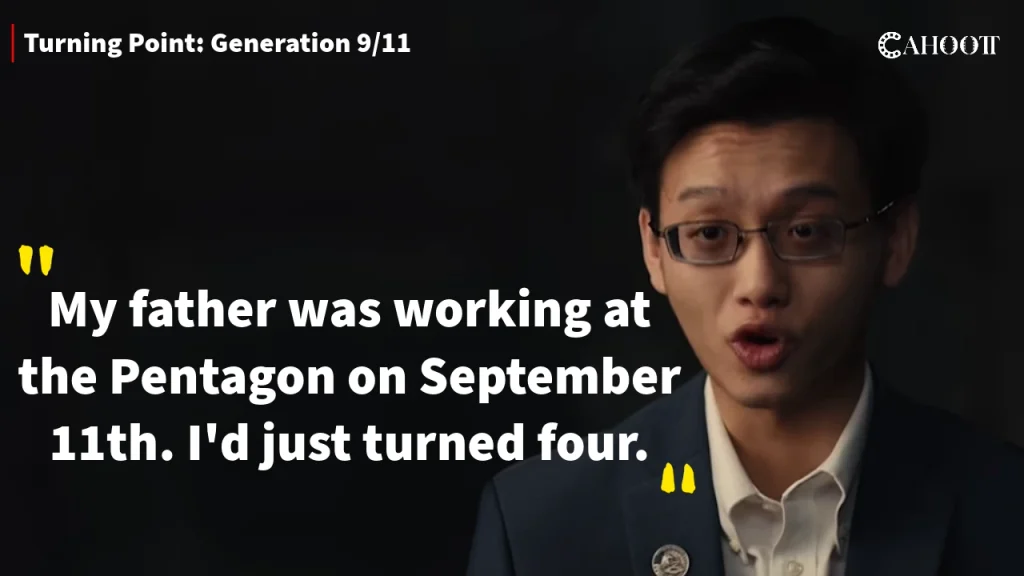
5. My father was working at the Pentagon on September 11th. I’d just turned four.
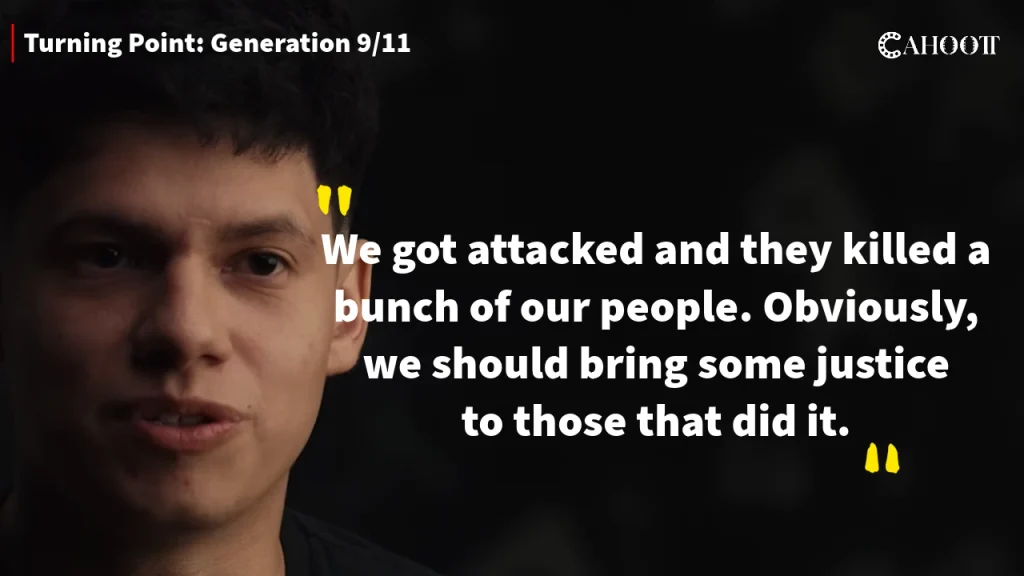
6. We got attacked and they killed a bunch of our people. Obviously, we should bring some justice to those that did it.
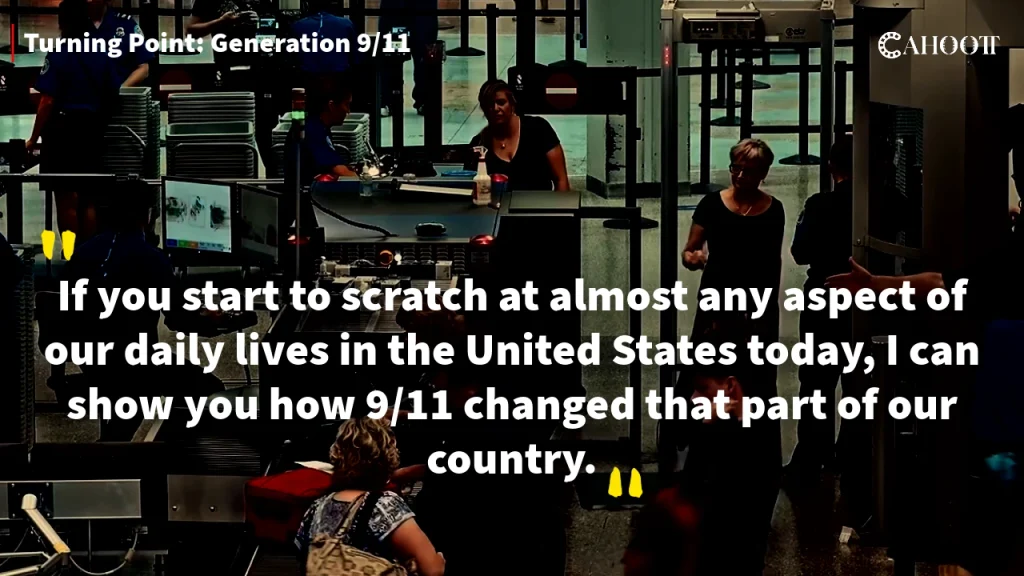
7. If you start to scratch at almost any aspect of our daily lives in the United States today, I can show you how 9/11 changed that part of our country.
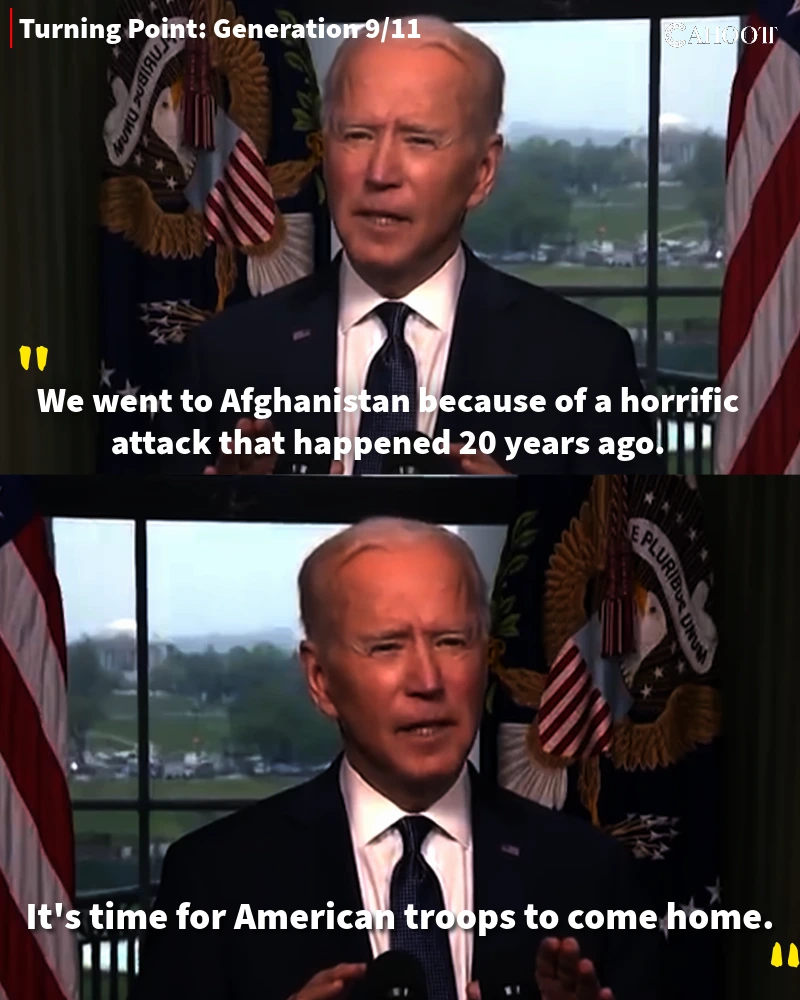
8. – We went to Afghanistan because of a horrific attack that happened 20 years ago.
– It’s time for American troops to come home.
9. Abbey Gate was a microcosm of the 20-plus-year war in the Middle East.
10. We underestimated how quickly that the Taliban would regain control. We thought we would have time to get everybody out. That was obviously not the case.
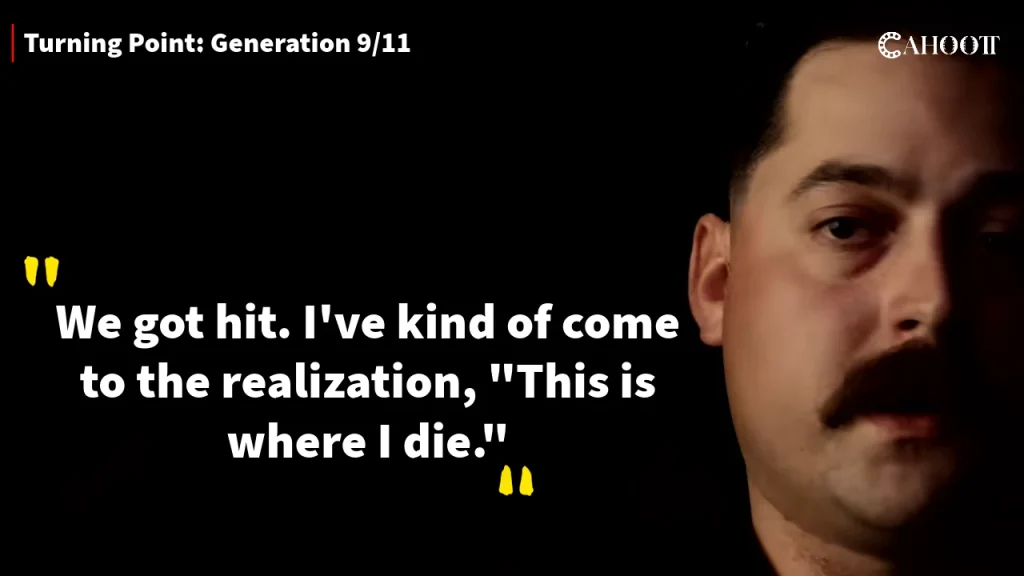
11. We got hit. I’ve kind of come to the realization, “This is where I die.”
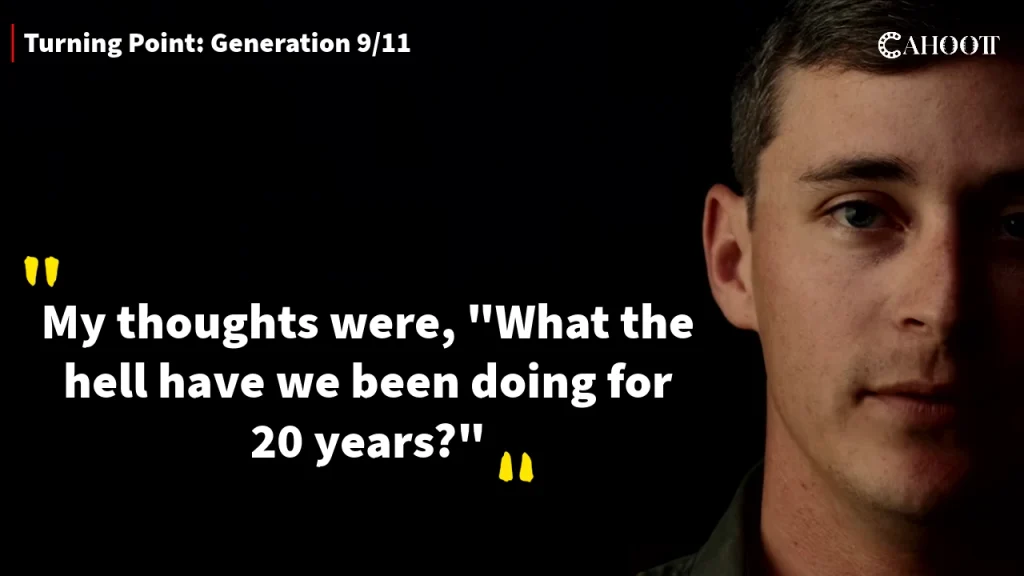
12. My thoughts were, “What the hell have we been doing for 20 years?”
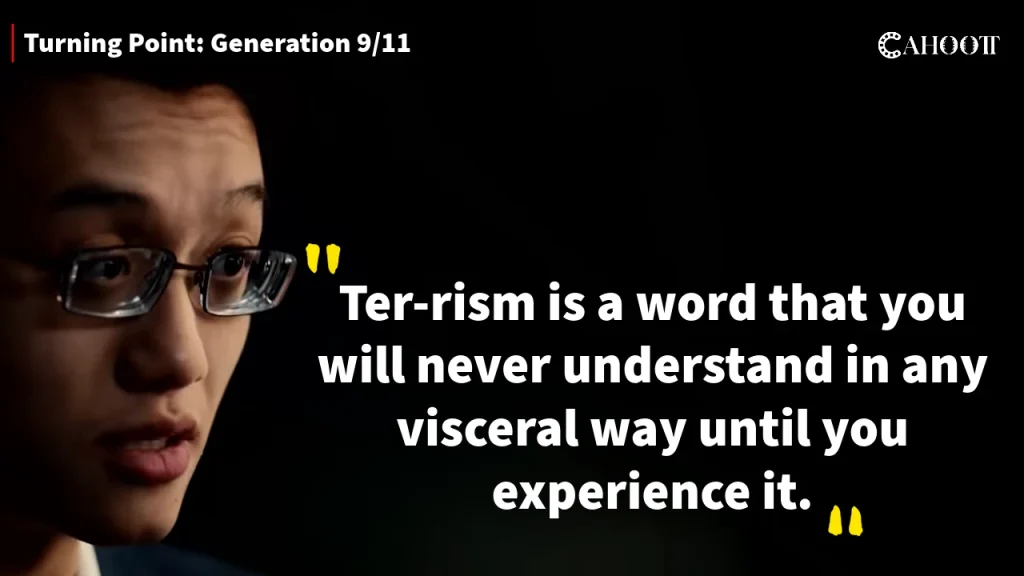
13. Ter-rism is a word that you will never understand in any visceral way until you experience it.
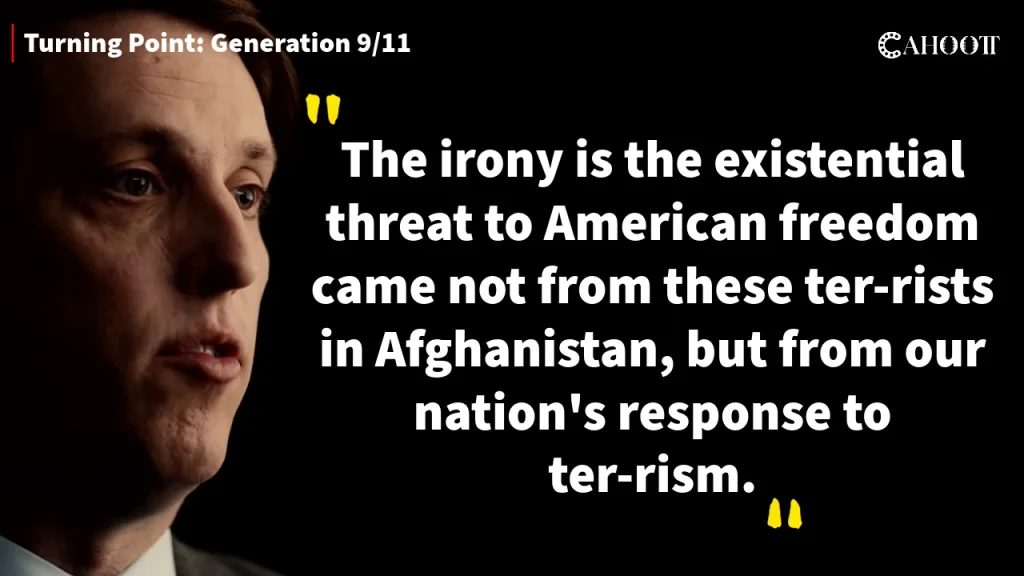
14. The irony is the existential threat to American freedom came not from these terrorists in Afghanistan, but from our nation’s response to ter-rism.
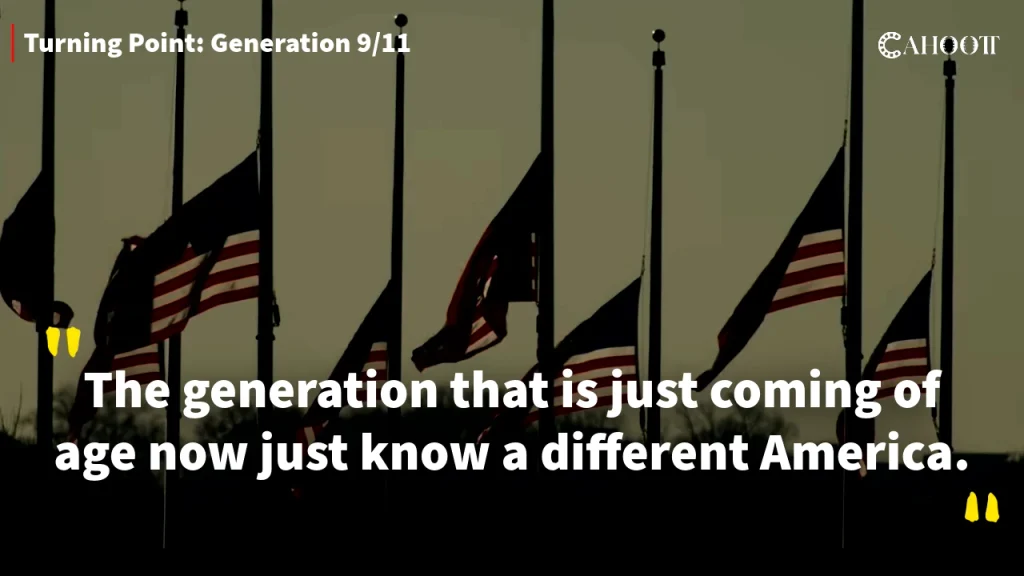
15. The generation that is just coming of age now just know a different America.
Also Read – The Whisper Man Dialogues: 9 Best Spine-chilling Quotes
A 9/11 Perspective That Refuses to Stay Narrow
Perhaps the most striking choice the documentary makes is refusing to tell this story from only one vantage point. Alongside American voices, the grieving families, the journalists, the service members – Generation 9/11 also turns to Afghan citizens whose entire lives were shaped by a war they didn’t start and a withdrawal they didn’t control. It’s a deliberate widening of the lens, and an uncomfortable one: it asks audiences to sit with the fact that the aftermath of 9/11 was never confined to American soil, and that an entire generation on the other side of the world inherited just as much of that day’s weight as anyone born in the United States.
That choice is what keeps the film from becoming a nostalgia piece dressed up as a tribute. It isn’t interested in comfort, and it isn’t interested in easy patriotism. It’s interested in consequence – global, generational, and still unfinished.
Why Netlfix’s Documentary ‘Turning Point: Generation 9/11’ Matters Now
Twenty-five years is long enough for an event to start slipping out of living memory and into something closer to folklore – a date people know without quite feeling. Turning Point: Generation 9/11 seems built specifically to resist that drift, arriving at the exact moment when the last generation with a direct memory of that morning is being outnumbered by the one that only inherited its consequences.
Turning Point: Generation 9/11 won’t offer closure, because the film doesn’t seem to believe closure is honestly available yet. What it offers instead is something harder and more necessary: a reminder that history isn’t something that happened to other people, in another time. For an entire generation, it’s simply the world they’ve been living in their whole lives – and Generation 9/11 finally gives that inheritance a name.
Turning Point: Generation 9/11 premieres on Netflix on September 2, 2026.