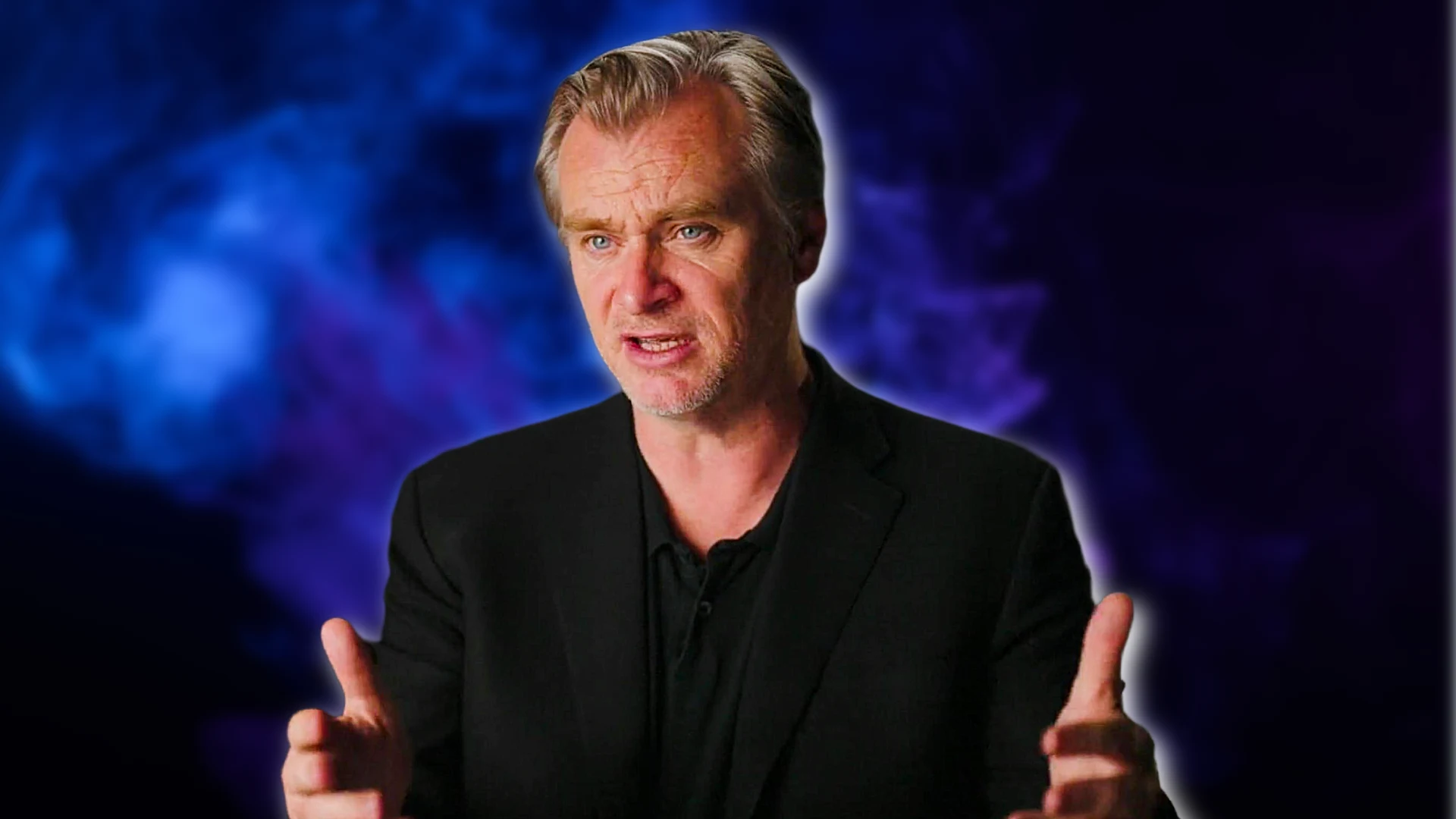

Christopher Nolan is known for creating mind-bending films and realistic situations, as well as for his fascination with IMAX cameras. Although, it’s a different story that even the IMAX cameras sometimes end up getting “injured” during his shoots. But who cares? Because Nolan’s final product is nothing short of a masterpiece. And today, we’re going to talk about the best movies he has made throughout his incredible career.
Christopher Nolan is not just a phenomenal and creative director, but he is also highly bankable. To date, Nolan’s films have grossed more than $7.7 billion worldwide, which puts him at third place after Steven Spielberg and James Cameron. Throughout his career, Nolan has delivered three billion-dollar movies and has also earned two Academy Awards to his name. That makes it all the more interesting to explore some of the most gripping and remarkable movies he has made so far.
Christopher Nolan is not just a phenomenal and creative director, but he is also highly bankable. To date, Nolan’s films have grossed more than $7.7 billion worldwide, which puts him at third place after Steven Spielberg and James Cameron. Throughout his career, Nolan has delivered three billion-dollar movies and has also earned two Academy Awards to his name. That makes it all the more interesting to explore some of the most gripping and remarkable movies he has made so far.
The Prestige: A Magic Trick Nolan Never Fully Explains
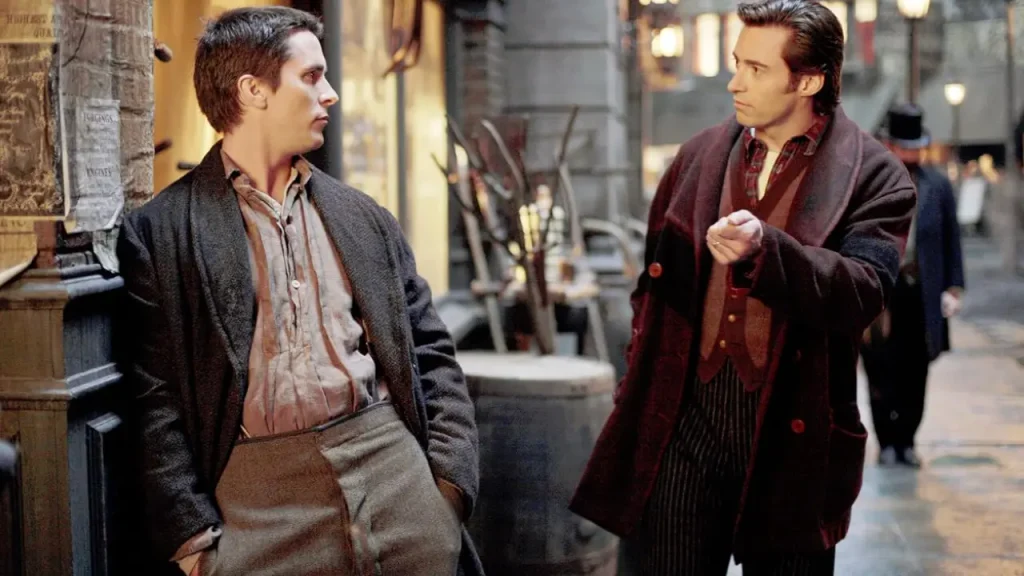
There’s a reason The Prestige still gets picked apart on forums nearly two decades later it’s a film that hides its biggest secret in plain sight, daring you to catch it the way a magician dares you to watch his hands. Adapted from Christopher Priest‘s 1995 novel and co-written by Nolan and his brother Jonathan, the film structures its entire narrative around the three-part anatomy of a magic trick – the Pledge, the Turn, and the Prestige turning the movie’s own storytelling into the illusion it’s dissecting.
At its center are Hugh Jackman‘s Robert Angier and Christian Bale‘s Alfred Borden, two rival illusionists in Victorian London whose professional jealousy metastasizes into a ruinous, decade-spanning obsession. Michael Caine anchors things as their world-weary engineer, while a young Scarlett Johansson and Rebecca Hall round out the cast.
IMDb – 8.5/10 (1.6M Votes)
Interstellar: Nolan’s Most Unguarded Film
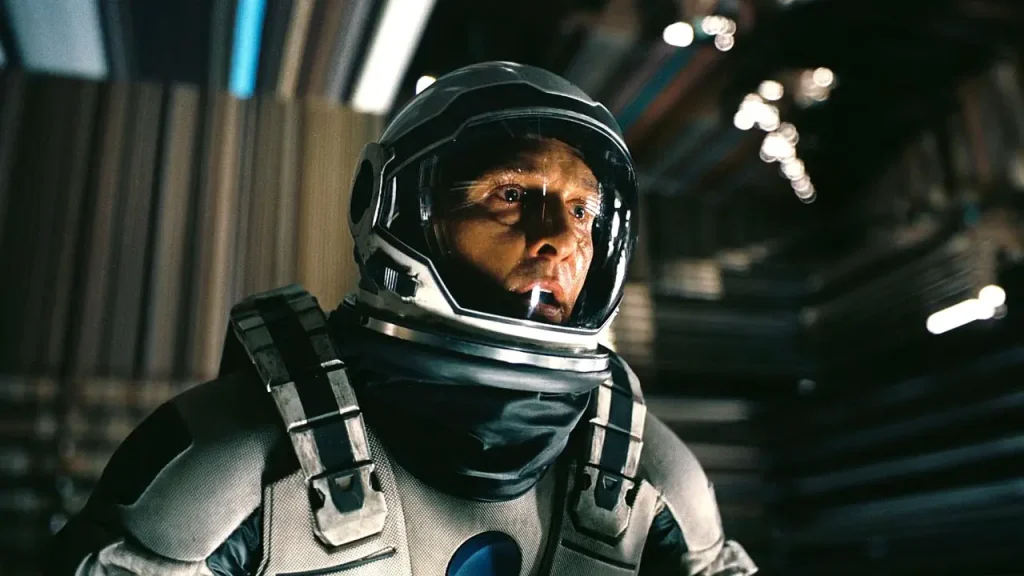
Christopher Nolan’s Interstellar (2014) begins on a dying Iowa farm and ends at the edge of a black hole – a scale of ambition rare even by his standards.
Matthew McConaughey’s Cooper, a former NASA pilot, leaves his daughter Murph (Mackenzie Foy, later Jessica Chastain) behind for a wormhole mission he expects will take years. Relativity disagrees: a few hours near the black hole Gargantua cost the crew over two decades at home.
That time gap, built on physicist Kip Thorne’s real equations, is the film’s true engine. Nolan uses hard science less to explore space than to ask what happens to love when it’s stretched across time itself. Hans Zimmer’s organ score trades bombast for grief, and it lands harder than almost anything else in the film.
The divisive tesseract finale still splits audiences – audacious metaphor to some, over-sentimental to others but the craft underneath rarely gets argued: practical effects, IMAX-scale visuals, and a McConaughey performance built on real anguish.
A decade on, Interstellar remains Nolan’s most emotionally exposed film, dressed as science fiction.
IMDb – 8.7/10 (2.5M Votes)
Following: Christopher Nolan’s Thesis Statement, Written on No Budget
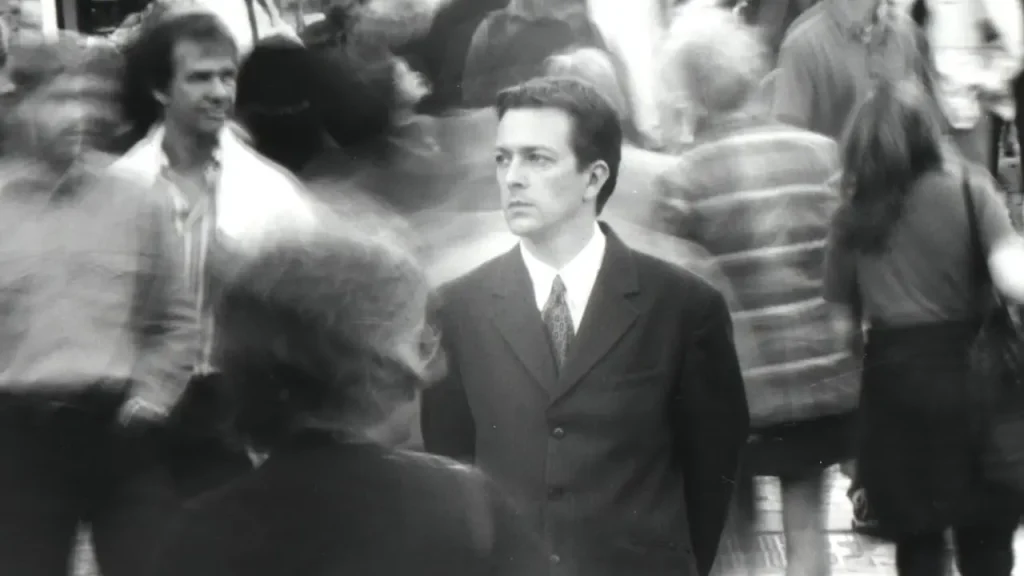
Before Interstellar or Inception, there was Following (1998), Christopher Nolan’s 69-minute black-and-white debut, shot on weekends over a year for roughly $6,000.
The premise is deceptively simple: Bill (Jeremy Theobald), an aimless writer, follows strangers through London for material, until one of his targets, a charismatic burglar named Cobb (Alex Haw), catches him and invites him along. What starts as a game of observation curdles into manipulation, blackmail, and a femme fatale who may not be who she claims.
Nolan tells the story out of order cutting between three timelines without warning – a structural gamble that would later define Memento and much of his career. Here, the fractured chronology isn’t just style; it hides the con being run on both Bill and the audience until the final scene recontextualizes everything that came before.
The film’s grain and shoestring budget show, but its instincts don’t: an interest in unreliable narrators, doubled identities, and characters who mistake control for understanding. Nearly three decades later, Following reads less like an experiment and more like Nolan’s thesis statement, written before he had the budget to prove it.
IMDb – 7.4/10 (110K Votes)
Oppenheimer: A Thriller Disguised as a Biopic
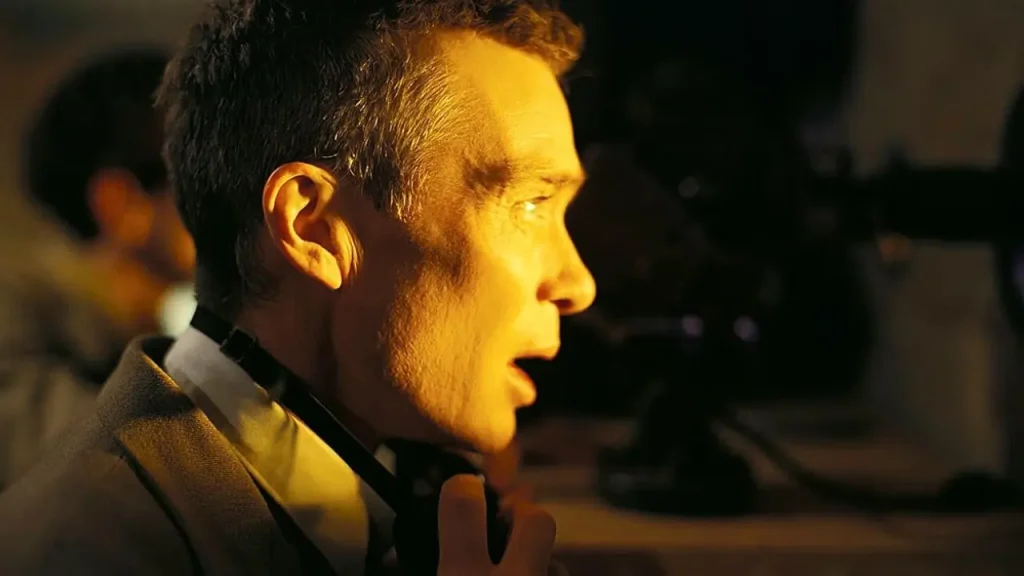
Christopher Nolan’s Oppenheimer (2023) does something rare for a three-hour film about physics and bureaucracy: it plays like a thriller.
Cillian Murphy stars as J. Robert Oppenheimer, the physicist who led the Manhattan Project’s race to build the atomic bomb, only to spend the rest of his life reckoning with what he’d unleashed. Nolan splits the film into two timelines one in color, tracking Oppenheimer’s rise and the Trinity test; one in black-and-white, following the 1959 Senate hearing of Lewis Strauss (Robert Downey Jr.), the man who later engineered Oppenheimer’s downfall.
The Trinity test itself, shot without CGI on 65mm and 70mm IMAX film, is the film’s centerpiece, a slow-building sequence that trades spectacle for dread, letting silence do the work an explosion usually would. It’s a fitting choice: the film is less interested in the bomb than in the moral weight of building it.
What lingers isn’t the science but the interrogation of Oppenheimer, and of the country that used him and then discarded him. Anchored by Murphy’s most restrained performance yet, Oppenheimer is Nolan working at his most disciplined, treating a hearing room with the same tension he once reserved for heists.
IMDb – 8.3/10 (954K Votes)
The Dark Knight: The Comic Book Movie That Refused to Apologize
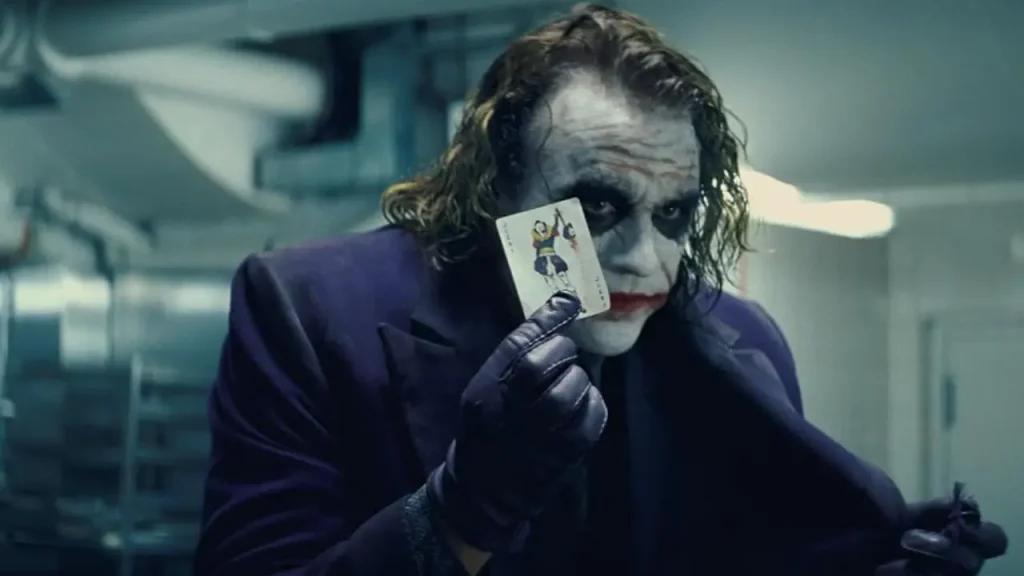
Christopher Nolan’s The Dark Knight (2008) didn’t just redefine the superhero movie it made critics stop apologizing for taking one seriously. Batman (Christian Bale) faces off against the Joker (Heath Ledger), a self-described “agent of chaos” with no backstory that stays the same twice, only competing scars-origin stories he tells for sport. The film plays less like a comic book and more like a crime epic – Michael Mann by way of Gotham.
A few facts worth knowing: Heath Ledger prepared by locking himself in a hotel room for weeks, keeping a “Joker diary” of thoughts, clippings, and jokes. He passed away months before the film’s release and won a posthumous Oscar for the role, only the second posthumous acting win in history. Nolan shot several sequences, including the famous truck flip, using IMAX cameras – the first mainstream film to do so. And that truck flip? Entirely practical, no CGI.
Nearly two decades later, it’s still the film people point to when arguing a “comic book movie” can just be a great movie, full stop.
IMDb – 9.1/10 (3.1M Votes)
Memento: Nolan’s Puzzle Box, Told in Reverse
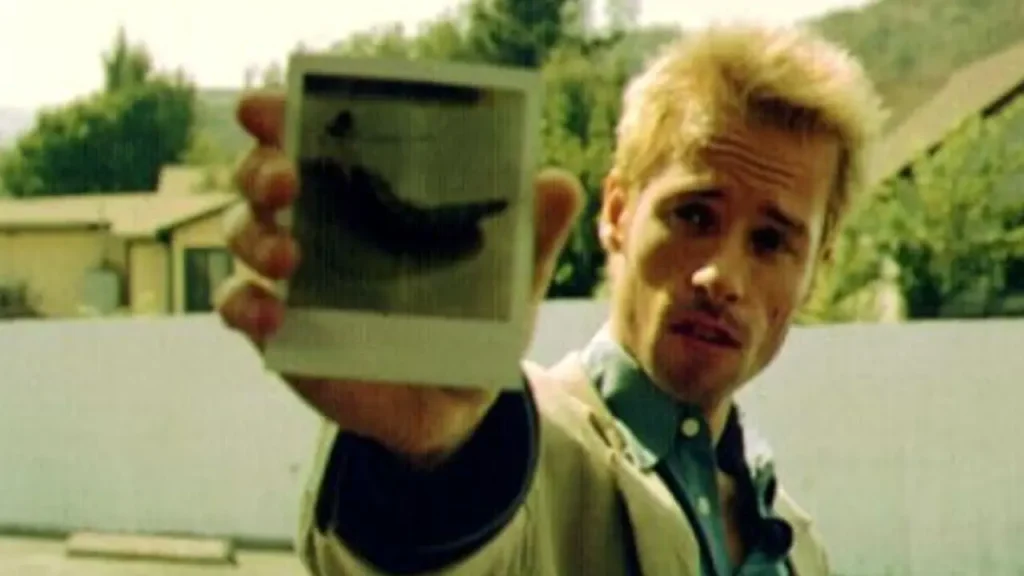
Long before he was bending IMAX film stock to his will, Christopher Nolan made his real name with a puzzle box shot on a shoestring budget – and Memento remains the purest distillation of his obsessions: memory, unreliable narration, and structure as storytelling. The film follows Guy Pearce‘s Leonard, a man with anterograde amnesia hunting his wife’s killer, tattooing clues onto his own body because he can’t form new memories for longer than a few minutes.
The gimmick that made it legendary: Nolan tells the story in reverse, color-coded scenes unspooling backward while black-and-white segments run forward to meet them in the middle – forcing the audience to experience Leonard’s own disorientation in real time.
A few facts worth knowing: the screenplay was based on a short story, “Memento Mori,” written by Nolan’s brother Jonathan, who reportedly pitched it to Christopher on a road trip. The film was shot in a brisk 25 days on a budget of roughly $9 million, and made back over $39 million. It also landed Nolan his first Academy Award nomination, for Best Original Screenplay – proof his fixation on scrambling time was award-worthy from day one.
IMDb – 8.4/10 (1.4M Votes)
Inception: A Heist Movie Staged Inside the Mind
Christopher Nolan’s Inception (2010) turns a heist movie inside out, staging its job not in a vault but inside someone’s subconscious.
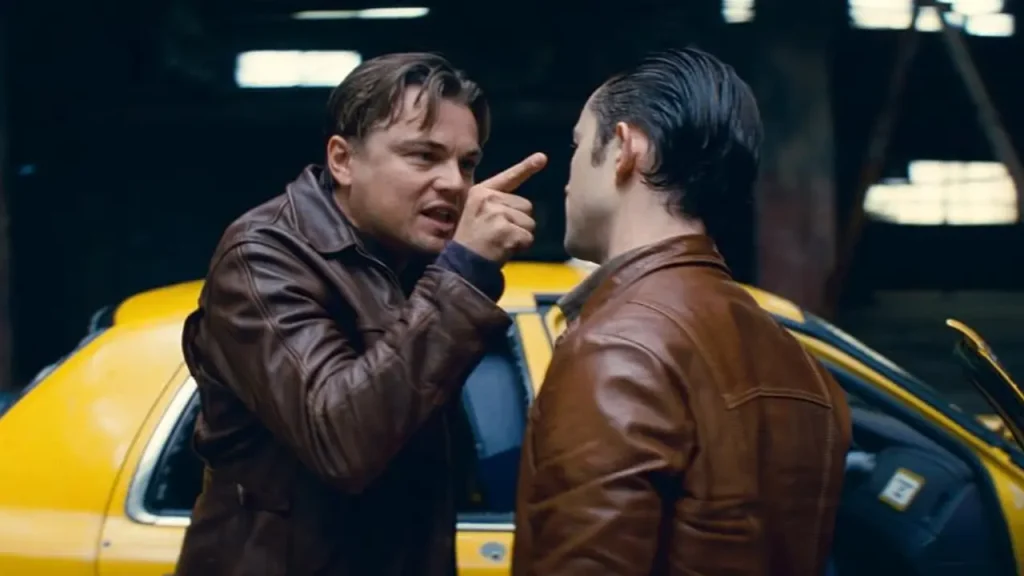
Dom Cobb (Leonardo DiCaprio) is an “extractor,” stealing secrets from dreams, until a client offers him something rarer: a chance to plant an idea instead of stealing one, in exchange for erasing the guilt that’s kept him from his children. To pull it off, his team including architect Ariadne (Elliot Page), forger Eames (Tom Hardy), and point man Arthur (Joseph Gordon-Levitt) must descend through nested dream levels, each one running slower than the last, while Cobb’s dead wife, Mal (Marion Cotillard), keeps surfacing as sabotage from within his own mind.
Nolan treats the premise less like science fiction and more like architecture, building rules – shared dreaming, time dilation, totems to test reality with the rigor of a heist blueprint. The zero-gravity hallway fight remains the film’s calling card precisely because it was built, not rendered: a rotating physical set standing in for CGI.
The final spinning top, left ambiguous on purpose, turned Inception into a puzzle audiences are still arguing over proof that Nolan’s real subject was never dreams, but certainty itself.
IMDb – 8.8/10 (2.8M Votes)
The Odyssey: Homer Reborn on the Biggest Screens on Earth
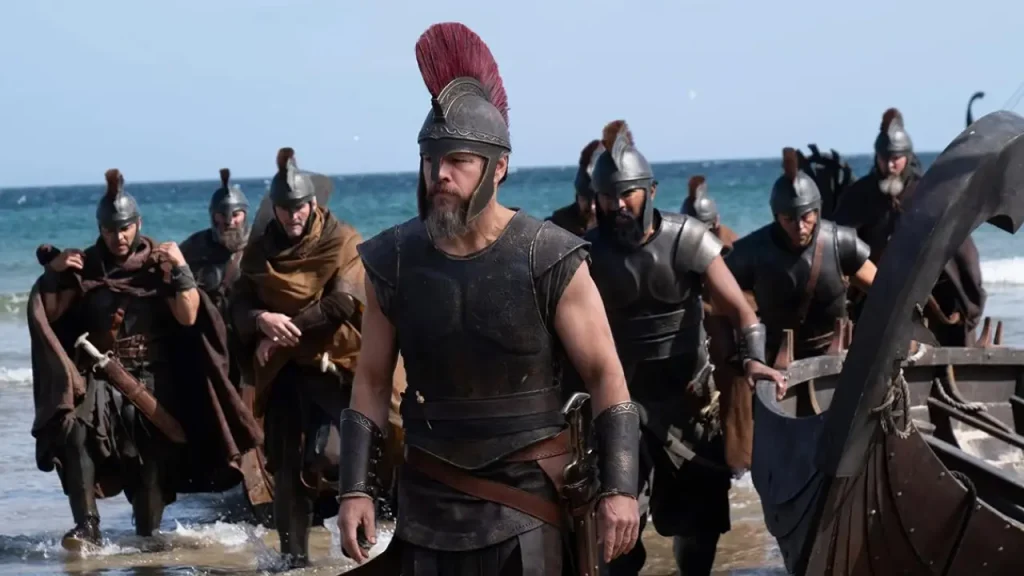
Christopher Nolan’s The Odyssey (2026) does something no filmmaker has attempted before: it brings Homer’s 2,800-year-old epic to IMAX, shot entirely on 70mm film. Matt Damon leads as Odysseus, the king of Ithaca fighting his way home after the Trojan War, opposite Anne Hathaway’s Penelope and Tom Holland’s Telemachus with Zendaya as the goddess Athena and Charlize Theron as the witch-goddess Circe.
A few facts worth knowing: this is Nolan’s first film since Oppenheimer swept the Oscars, and it’s his biggest production to date, shot across Morocco, Greece, Sicily, Iceland, and Scotland with water sequences filmed using an actual full-scale Norwegian longship. It opened to roughly $264 million worldwide on its opening weekend, outpacing Oppenheimer’s debut. And true to Nolan’s obsession with practical filmmaking, it’s the first movie built entirely around IMAX’s newest film technology, bringing Homer to the biggest screens on Earth for the first time.
Where Inception asked what’s real and The Dark Knight asked what a hero costs, The Odyssey asks something older: what does it actually take to get home?
IMDb – 8.5/10
Tenet: The Movie That Tried to Outrun Time Itself
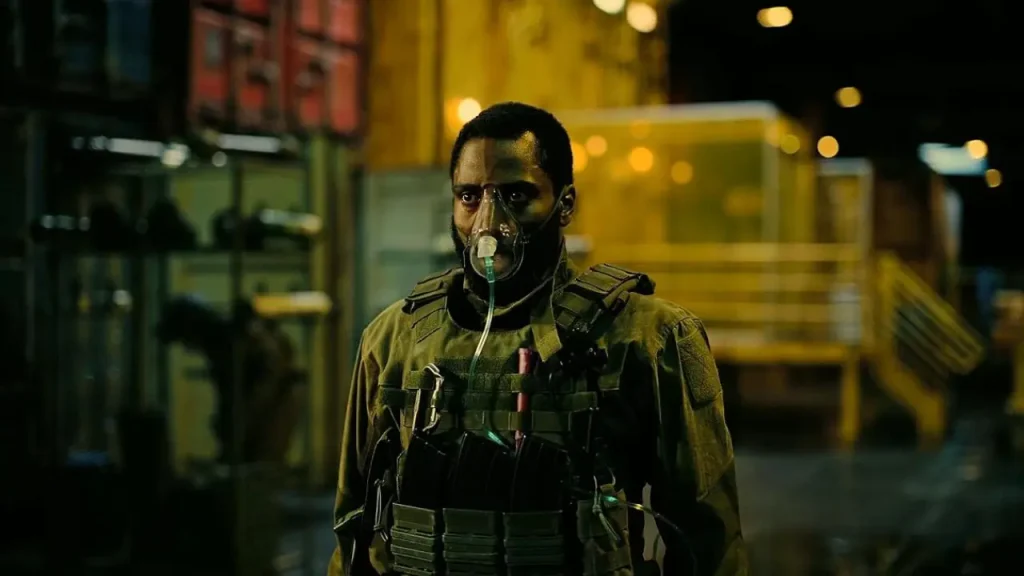
For all his obsession with time, Tenet might be the one Nolan film where he tried to break it entirely, building a thriller around “inversion,” a mechanic where objects and people move backward through entropy itself, colliding with their forward-moving counterparts in scenes choreographed both ways at once. John David Washington anchors it as the nameless Protagonist, opposite Robert Pattinson, Elizabeth Debicki, and Kenneth Branagh‘s deliciously venomous Russian oligarch.
A few facts worth knowing: true to Nolan form, he refused to fake the film’s most jaw-dropping stunt digitally – production actually bought a real Boeing 747 and crashed it into a hangar, because a scale model reportedly looked less convincing. The title itself is a palindrome, echoing the ancient Sator Square (a five-word Latin palindrome that includes “TENET”), which the film leans on directly. Longtime composer Hans Zimmer sat this one out for the first time in years, busy scoring Dune, so Nolan brought in Ludwig Göransson instead. And released mid-2020, Tenet became an unlikely pandemic test case – the movie theaters were counting on to prove audiences would still show up.
IMDb – 7.3/10 (679K Votes)
The Dark Knight Rises: Closing the Trilogy with a Siege, Not a Sequel
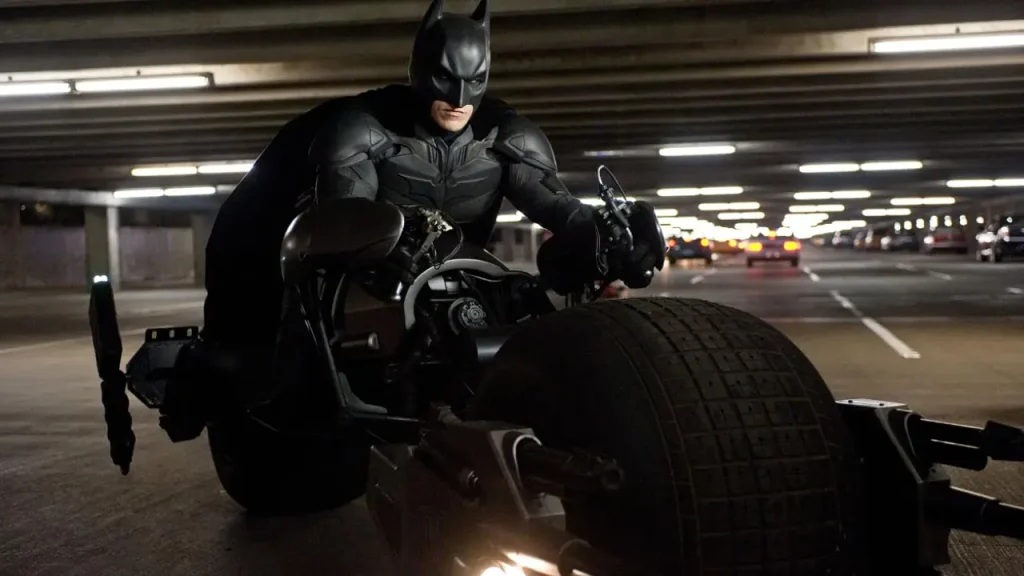
Christopher Nolan closed his Batman trilogy in 2012 with The Dark Knight Rises, a film built less as a superhero sequel and more as a siege epic Gotham conquered from within before Batman even reappears.
Eight years after The Dark Knight, Bruce Wayne (Christian Bale) is a recluse, and Gotham is drawn back into chaos by Bane (Tom Hardy), a masked mercenary finishing the mission Ra’s al Ghul started in Batman Begins. Tom Hardy performed almost the entire role through his eyes and posture alone, since the mask restricted everything else – his voice was recorded and layered in separately.
Nolan shot the film with more IMAX footage than any of his previous movies, including a prologue where a real cargo plane, cut in half, was dropped mid-air for the hijacking sequence. The stadium collapse scene used thousands of actual fans and players at Pittsburgh’s Heinz Field, filmed live during a Steelers game weekend.
The twist buried inside Marion Cotillard’s Miranda Tate – secretly Talia al Ghul and John Blake’s (Joseph Gordon-Levitt) revealed first name, Robin, both point past the credits. At $1.08 billion worldwide, it closed the trilogy as one of the highest-grossing of all time.
IMDb – 8.4/10 (1.9M Votes)
Conclusion
From a $6,000 black-and-white experiment shot on London weekends to a $264 million opening weekend for a 2,800-year-old epic, Christopher Nolan‘s filmography reads less like a career and more like an argument, one he’s been building, film by film, that spectacle and intelligence were never supposed to be mutually exclusive. Every entry on this list, from Memento‘s backward-unspooling grief to Oppenheimer‘s quiet, devastating reckoning, proves the same point: Nolan doesn’t just make movies people watch. He makes movies people can’t stop dissecting years later.
The trophy case backs it up. Oppenheimer alone swept the 2024 Academy Awards with seven wins, including Best Picture and a long-overdue Best Director statue for Nolan himself, alongside Best Actor for Cillian Murphy and Best Supporting Actor for Robert Downey Jr. a sweep echoed at the Golden Globes, where the film took home Best Motion Picture – Drama and Best Director in the same season. Add three billion-dollar blockbusters and a filmography that’s grossed north of $7.7 billion worldwide, and it’s clear Nolan has done what almost no other filmmaker has managed: turned “cerebral” into box office gold.
And with The Odyssey already outpacing Oppenheimer‘s own opening, it’s safe to say Nolan isn’t done rewriting what a blockbuster can be. Officially, there’s no filmmaker working today with a stranger, more ambitious, or more purely rewatchable body of work and if his track record is any indication, the best Christopher Nolan movie might still be the one he hasn’t made yet.